Logistique post-Brexit entre le Royaume-Uni et l'UE : comment expédier sans encombre sur les deux marchés
.jpg)
Depuis le Brexit, les expéditions du Royaume-Uni vers l'Europe ont radicalement changé. Déclarations en douane, droits de douane, obligations de TVA, surcharges des transporteurs, retards de dédouanement : les frictions sont bien réelles et impactent directement votre expérience client, vos taux de retour et vos marges.
La plupart des marques commencent par absorber ces coûts. Elles continuent d'expédier depuis le Royaume-Uni, ajoutent une mention sur les douanes lors du paiement, acceptent des délais de livraison plus longs et espèrent que les clients ne s'en apercevront pas. Certains ne le remarquent pas. Mais à mesure que le volume des commandes européennes augmente, le coût de ces frictions s'accumule, et il devient impossible d'ignorer la nécessité d'une véritable solution logistique en Europe.
Cet article détaille ce que la logistique au Royaume-Uni et la logistique en Europe impliquent réellement lorsqu'elles sont bien gérées, les complications spécifiques au Brexit que la plupart des guides omettent, et les points à vérifier chez un prestataire 3PL pour gérer les deux marchés sans multiplier les relations logistiques.
Ce qui a changé après le Brexit (et ce que cela vous coûte réellement)
La sortie du Royaume-Uni du marché unique européen a instauré une frontière douanière stricte. Pour les marques e-commerce , cela entraîne des conséquences concrètes à chaque étape du parcours de commande.
Déclarations en douane pour chaque expédition
Chaque colis quittant le Royaume-Uni pour l'UE nécessite désormais une déclaration en douane, des codes de marchandises, le pays d'origine et la valeur déclarée. Cela alourdit les processus, et toute erreur peut entraîner le blocage du colis à la frontière. Pour une marque expédiant des centaines de commandes par semaine, la charge administrative est considérable. Pour le client qui attend son colis, un blocage en douane est invisible et incompréhensible.
Droits de douane et TVA
Avant le Brexit, les consommateurs européens achetant auprès de marques britanniques ne payaient pas de droits de douane. Depuis, les marchandises entrant dans l'UE peuvent être soumises à des droits de douane selon la catégorie et la valeur déclarée. La TVA est également due à l'importation, soit collectée lors du paiement (via l'enregistrement IOSS), soit à la livraison, ce qui dégrade l'expérience client lorsque le transporteur exige un paiement avant de libérer le colis.
Le seuil de franchise de l'UE Le changement de seuil en juillet 2026 a supprimé l'ancienne franchise de droits de douane de 150 €, ce qui signifie que chaque expédition commerciale à destination de l'UE est désormais potentiellement soumise à des droits, quelle que soit sa valeur. Pour les marques qui continuent d'expédier depuis le Royaume-Uni vers l'UE, cela entraîne des conséquences financières importantes.
Surcharges des transporteurs et délais de livraison allongés
De nombreux transporteurs appliquent une surcharge de dédouanement aux expéditions entre le Royaume-Uni et l'UE. Les délais de livraison sont plus longs que pour des livraisons nationales équivalentes, généralement de quatre à sept jours ouvrables pour les services standard, contre un à deux jours pour le national. Sur un marché où la livraison en 24 ou 48 heures est devenue la norme, cet écart crée un désavantage concurrentiel par rapport aux vendeurs basés dans l'UE.
Complexité des retours
Les retours de clients européens vers un entrepôt britannique se heurtent aux mêmes contraintes douanières dans le sens inverse. La logistique est gérable, mais le coût et la complexité des retours depuis l'UE sont nettement plus élevés que pour des retours nationaux, ce qui affecte votre marge nette sur chaque commande européenne retournée.
Les deux modèles : expédition transfrontalière vs double implantation
Il existe globalement deux façons d'aborder la gestion des commandes au Royaume-Uni et dans l'UE. Comprendre les compromis entre ces deux options est le point de départ pour prendre la bonne décision.
Expédition transfrontalière depuis le Royaume-Uni
Vous conservez tout votre stock au Royaume-Uni et expédiez vos commandes à vos clients européens. Chaque commande franchit la frontière douanière. Ce modèle fonctionne pour de faibles volumes dans l'UE ; les contraintes sont gérables lorsque les commandes européennes ne représentent qu'une petite partie de votre activité totale. L'organisation opérationnelle est simple : un seul entrepôt, un seul stock, une seule relation avec un prestataire logistique (3PL).
Les problèmes s'accumulent avec le volume. Les coûts de revient augmentent. Les délais de livraison restent longs. Les taux de retour ont tendance à être plus élevés sur les marchés où la livraison est lente. Et à mesure que les attentes des clients européens en matière de rapidité de livraison augmentent, le désavantage concurrentiel par rapport aux vendeurs basés dans l'UE devient plus difficile à absorber.
Gestion logistique à double implantation : entrepôts au Royaume-Uni et dans l'UE
Vous stockez vos produits à la fois dans un centre de distribution au Royaume-Uni et dans un centre dans l'UE. Les commandes britanniques sont traitées localement. Les commandes européennes sont traitées depuis l'UE : aucune frontière douanière, des délais de livraison nationaux et une TVA européenne gérée directement sur le lieu de stockage.
Ce modèle élimine totalement les contraintes post-Brexit pour les clients européens. Leur commande est préparée et expédiée depuis l'UE. Ils la reçoivent dans les délais d'une livraison nationale. Pas de blocage en douane, pas de frais de douane imprévus, pas de surcharge de transporteur répercutée. Le processus de retour est également national du point de vue du client.
La complexité opérationnelle est différente mais gérable : vous devez désormais gérer deux lieux de stockage, ce qui nécessite soit de répartir les stocks entre les sites, soit de maintenir des stocks distincts. Un prestataire logistique (3PL) qui exploite les deux sites, ou qui dispose d'un réseau de partenaires étroitement intégré, simplifie considérablement cette gestion par rapport à la coordination de deux prestataires distincts.
Ce que signifie réellement « fluide » en pratique
L'expression « gestion logistique fluide entre le Royaume-Uni et l'UE » est souvent utilisée à tort et à travers. Voici ce qu'elle devrait signifier en pratique et les questions à poser pour le vérifier.
Point d'intégration unique. Votre boutique Shopify, votre site WooCommerce ou vos comptes de marketplace doivent automatiquement acheminer les commandes vers le lieu de traitement approprié : les commandes britanniques vers l'entrepôt britannique, et les commandes européennes vers l'entrepôt européen, sans intervention manuelle. Si vous devez trier ou réacheminer manuellement les commandes entre les sites, l'intégration n'est pas fluide.
Visibilité unifiée des stocks. Vous devriez être en mesure de visualiser votre état des stocks global, sur les deux sites, en une seule vue. Savoir que vous disposez de 500 unités au Royaume-Uni et de 200 en Europe, et pouvoir rééquilibrer les stocks entre ces deux zones lorsqu'un site est en sous-effectif, nécessite un WMS qui traite les deux sites comme faisant partie du même système plutôt que comme deux opérations distinctes.
Normes de service cohérentes. Précision du picking, rapidité d'expédition, gestion des retours: ces éléments doivent être équivalents sur les deux sites. Un prestataire logistique (3PL) qui exploite un site de haute qualité au Royaume-Uni mais utilise un partenaire aux normes inférieures dans l'UE crée une expérience client à deux vitesses selon la destination de la commande.
TVA et conformité gérées au niveau de l'entrepôt. La logistique dans l'UE exige une immatriculation à la TVA, l'application correcte des règles de TVA européennes et une documentation douanière précise pour toute expédition B2B . Votre prestataire logistique doit soit gérer cela directement, soit disposer d'un processus clair et établi, et non vous laisser résoudre ces problèmes seul.
Reporting consolidé. Vos données opérationnelles, volumes de commandes, niveaux de stocks, performances d'expédition et retours doivent pouvoir être consolidés dans un format cohérent pour les deux sites. Deux systèmes de reporting distincts signifient deux fois plus de tâches administratives pour une visibilité réduite de moitié.
Que rechercher chez un prestataire logistique (3PL)
Tous les prestataires logistiques qui prétendent couvrir le Royaume-Uni et l'UE n'opèrent pas réellement sur les deux marchés avec un niveau de qualité équivalent. Voici comment distinguer les véritables fournisseurs multi-sites de ceux qui ajoutent une capacité européenne comme une simple réflexion après coup.
Exploitent-ils leur propre site dans l'UE ou passent-ils par un partenaire ? L'exploitation d'un centre de distribution propre dans l'UE confère au prestataire un contrôle direct sur les normes de service, la technologie et les niveaux de service (SLA). Un partenariat peut fonctionner, mais il crée une dépendance qui affecte votre capacité à faire remonter les problèmes et à obtenir des réponses cohérentes. Posez des questions précises : qui exploite le site européen, quelles sont leurs normes de service et comment la performance est-elle suivie ?
Où se situe l'entrepôt européen ? L'emplacement est déterminant pour la portée de vos livraisons. Un centre de traitement aux Pays-Bas ou en Belgique offre un accès privilégié au cœur du marché européen (Allemagne, France, Pays-Bas, Belgique, Scandinavie), avec des délais de transit rapides à travers le continent et une proximité avec les grands ports (Rotterdam, Anvers) pour la réception des conteneurs. Une installation située en périphérie augmente les délais de livraison pour la majorité de vos commandes dans l'UE.
Quelles intégrations l'exploitation dans l'UE prend-elle en charge ? Votre logistique dans l'UE doit être connectée aux mêmes plateformes que celle au Royaume-Uni. Si le site européen utilise un WMS différent avec des capacités d'intégration distinctes, vous vous retrouverez avec une infrastructure technologique fragmentée. Demandez une liste précise des plateformes avec lesquelles l'exploitation dans l'UE s'intègre nativement.
Comment le transfert de stock entre les sites est-il géré ? Vous devrez déplacer périodiquement des stocks entre le Royaume-Uni et l'UE pour rééquilibrer vos niveaux, répondre aux fluctuations de la demande ou préparer une campagne. À quoi ressemble ce processus, combien de temps prend-il et quels en sont les coûts ?
Quel est le processus de retour pour les commandes dans l'UE ? Les retours des clients européens sont-ils renvoyés vers le site dans l'UE ou au Royaume-Uni ? S'ils sont réacheminés vers le Royaume-Uni, vous recréez les contraintes douanières pour vos retours. Les retours dans l'UE doivent être traités localement dans la mesure du possible.
Les opérations logistiques de SCEND au Royaume-Uni et dans l'UE
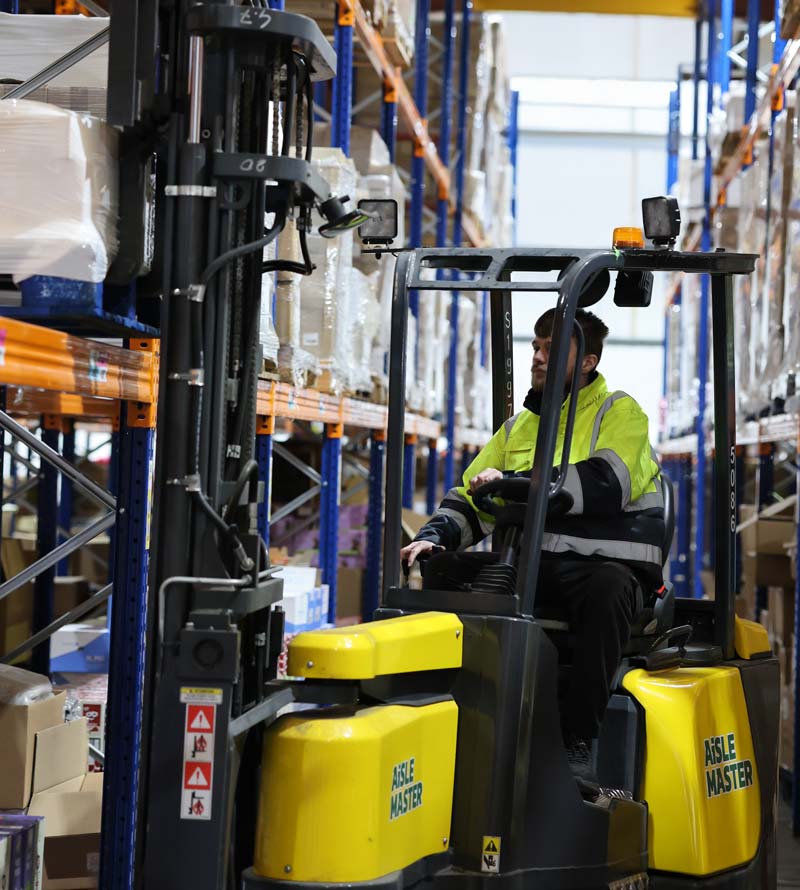
SCEND exploite des centres de traitement à la fois au Royaume-Uni et dans l'UE, offrant aux marques un interlocuteur 3PL unique pour les deux marchés.
L'installation aux Pays-Bas bénéficie d'un accès direct aux autoroutes A27 et A58 et se trouve à proximité immédiate des ports de Rotterdam et d'Anvers, deux des plus grands ports à conteneurs d'Europe. Ce positionnement permet une excellente réception des conteneurs entrants et une distribution rapide vers l'ensemble du marché européen.
Les deux sites fonctionnent selon les mêmes normes opérationnelles : 99,9 % de précision dans la préparation des commandes, une heure limite d'expédition le jour même fixée à 21h et une gestion cohérente des retours. L'infrastructure technologique est intégrée, les commandes sont automatiquement acheminées vers le bon site, les stocks sont visibles sur les deux sites via une vue unique et les rapports sont consolidés.
Pour les marques qui se développent en Europe après le Brexit, cela signifie que les contraintes liées à l'UE sont gérées au niveau de l'infrastructure. Les clients européens reçoivent leurs commandes avec des délais de livraison locaux, sans complications douanières, sans frais de douane imprévus et avec un processus de retour qui reste au sein de l'UE. Pour les clients britanniques, rien ne change. L'exploitation évolue au rythme de la croissance de votre volume dans l'UE, sans nécessiter de changement de prestataire ou de relation logistique supplémentaire.
Questions fréquentes
Dois-je m'immatriculer à la TVA dans l'UE si j'utilise un centre de traitement européen ?
Oui, si vous stockez des marchandises dans un pays de l'UE, vous devrez généralement vous immatriculer à la TVA dans ce pays. Votre prestataire 3PL devrait être en mesure de vous orienter vers les bons conseils, et beaucoup travaillent avec des spécialistes reconnus de la conformité à la TVA dans l'UE. La bonne nouvelle est que l'immatriculation à la TVA dans l'UE vous permet également d'utiliser le guichet unique (OSS) pour les ventes B2C dans plusieurs États membres, ce qui simplifie considérablement vos obligations fiscales par rapport à une immatriculation dans chaque pays individuellement.
Qu'est-ce que l'IOSS et en ai-je besoin ?
L'IOSS (Import One Stop Shop) est un système européen qui permet aux vendeurs hors UE de collecter la TVA au moment de la vente pour les commandes inférieures à 150 €, et de la reverser de manière centralisée plutôt que de la faire payer à la livraison. Si vous expédiez vers l'UE depuis le Royaume-Uni sans entrepôt européen, l'immatriculation à l'IOSS est fortement recommandée : elle élimine le problème des « frais de douane réclamés à la livraison » qui nuit à l'expérience client. Si vous disposez d'un centre de traitement dans l'UE, l'IOSS est moins pertinent pour ces commandes, car elles sont expédiées localement au sein de l'UE.
Comment répartir les stocks entre le Royaume-Uni et les sites dans l'UE ?
La répartition idéale dépend du volume de vos commandes dans l'UE et de la prévisibilité de la demande par marché. Un point de départ courant consiste à positionner suffisamment de stock dans l'UE pour couvrir quatre à six semaines de demande, puis à réapprovisionner depuis le Royaume-Uni selon les besoins. Votre prestataire 3PL doit vous fournir des données d'inventaire qui rendent cette décision simple et factuelle, plutôt que basée sur des suppositions. À mesure que le volume dans l'UE augmente et que les tendances de la demande deviennent plus claires, la répartition peut être affinée.
Que se passe-t-il avec les retours dans l'UE ?
Avec un centre de traitement des commandes dans l'UE, les retours des clients européens doivent être renvoyés vers le site européen, où ils seront traités, inspectés, puis réintégrés au stock vendable ou éliminés. Cela permet de maintenir le processus de retour au niveau local pour vos clients européens et d'éviter les complications douanières liées au renvoi des produits vers le Royaume-Uni. Demandez spécifiquement à votre prestataire logistique (3PL) comment les retours européens sont gérés et si le site européen dispose des mêmes capacités de traitement des retours que vos opérations au Royaume-Uni.
Puis-je utiliser une seule boutique Shopify pour le traitement des commandes au Royaume-Uni et dans l'UE ?
Oui. Une seule boutique Shopify peut être configurée pour acheminer les commandes vers différents centres de traitement en fonction de l'adresse de livraison du client. Cela nécessite une intégration correcte entre Shopify et le système de gestion d'entrepôt (WMS) de votre prestataire logistique, mais il s'agit d'une configuration standard pour tout prestataire exploitant plusieurs sites. Vous ne devriez pas avoir besoin de deux boutiques distinctes ou de deux systèmes de gestion des commandes séparés pour gérer vos expéditions au Royaume-Uni et dans l'UE via un seul prestataire.
Quelle est la différence entre expédier depuis le Royaume-Uni ou depuis un entrepôt dans l'UE en ce qui concerne les droits de douane ?
Expédier depuis le Royaume-Uni vers un client européen signifie que les marchandises franchissent une frontière douanière et peuvent être soumises à des droits d'importation en fonction du code marchandise du produit, de la valeur déclarée et des règles d'origine. Expédier depuis un entrepôt situé dans l'UE vers un client européen constitue une transaction locale : il n'y a pas de frontière douanière, pas de droits d'importation, et seule la TVA européenne standard s'applique. La complexité liée aux droits de douane est totalement éliminée par une expédition depuis l'intérieur de l'UE.
Conclusion
Depuis le Brexit, la question pour les marques e-commerce britanniques vendant en Europe n'est plus de savoir si les frictions transfrontalières existent. Elles existent. La question est de savoir si vous les absorbez, si vous les répercutez sur vos clients ou si vous les éliminez au niveau de votre infrastructure.
Les absorber est une stratégie à court terme qui devient de plus en plus coûteuse à mesure que vos volumes européens augmentent. Les répercuter sur les clients, par des délais de livraison plus longs, des frais de douane imprévus ou une expérience de paiement dégradée, constitue un désavantage concurrentiel face aux vendeurs basés dans l'UE. Les éliminer grâce à une véritable opération de traitement des commandes dans l'UE est la seule approche viable à grande échelle.
La question à poser à votre prestataire logistique n'est pas « gérez-vous l'UE ? ». La plupart répondront oui. La question est : exploitez-vous votre propre site européen selon les mêmes normes que vos opérations au Royaume-Uni, avec une technologie intégrée et une visibilité unifiée ? C'est cette capacité qui rend le traitement des commandes au Royaume-Uni et dans l'UE réellement fluide.
Si vous vendez en Europe et souhaitez comprendre ce qu'une logistique sur deux sites via SCEND pourrait apporter à votre entreprise, contactez notre équipe (scend.com/contact). Nous opérons sur les deux marchés, depuis nos propres sites, selon les mêmes standards, et nous pouvons vous accompagner dans les étapes de cette transition.
Lectures complémentaires
– Services de traitement des commandes dans l'UE
– Services de traitement des commandes au Royaume-Uni
– Fin du régime de minimis dans l'UE : ce que les marques e-commerce doivent savoir
.jpeg)
.webp)
.webp)


