Built for brands growing into Europe: our EU fulfilment centre is now open
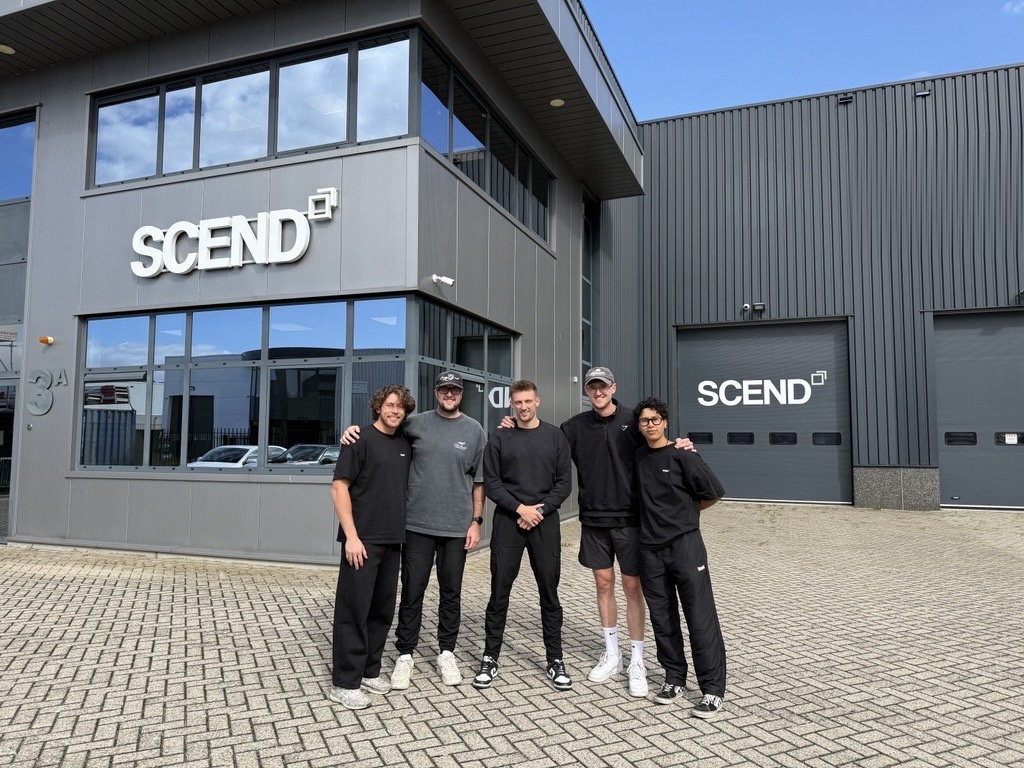
Growing brands don't stop at the border, and neither do we. Our new EU fulfilment centre is officially open in North Brabant, the Netherlands. It's our second owned site, working alongside our UK fulfilment centre. It means brands selling into Europe can now hold stock inside the EU and grow across both markets with one 3PL partner.
This new warehouse marks the next step of our own growth journey. But one that was shaped by our clients, their needs and the way that the eCommerce market post Brexit is leaning.
Why did SCEND choose the Netherlands for its EU fulfilment centre?
We chose the Netherlands because it gives growing brands a central base for eCommerce fulfilment across Europe, and because that's where our clients' growth was pointing. But it wasn't the plan we started with.
In 2025, we mapped out a strategic growth plan for the business. As with any fulfilment business scaling up, the central question was where to expand next, and which market would give our clients the biggest opportunity.
America looked like the obvious answer. The US is one of the largest eCommerce markets in the world. Plenty of UK brands have expanded there before, so there's a well-established playbook for US fulfilment. For a growing 3PL, it seemed like the logical next move.
But the best growth plans are built around demand, not assumptions. Working in eCommerce every day showed us that the biggest opportunity for our clients wasn't in the US, it was much closer to home.
More and more of our clients were growing in Europe. At the same time, they were running into the barriers that come with selling into the EU post-Brexit. So we asked ourselves a simple question. Should we follow our original plan, or follow our clients?
The answer was the EU. From there, we needed a location that worked for our team and could act as a central hub, serving multiple EU markets from a single warehouse. The Netherlands was the clear choice. Our fulfilment centre in North Brabant sits close to the ports of Rotterdam and Antwerp, with direct access to the A27 and A58 motorways. That gives fast reach into Germany, France, Belgium, and beyond, so stock sits close to European customers.
How Brexit tipped the scales for EU fulfilment.
Brexit turned shipping to the EU from a domestic delivery into an export, changing the economics of cross-border eCommerce for every UK brand selling into Europe. Our clients weren't asking about Europe by chance. They were feeling the impact on their growth.
The real challenge isn't any single parcel, it's scale. For a brand sending a handful of EU orders a week, the extra paperwork and costs are manageable. But as European sales grow, so does the friction, and it starts to show up in the places that hold a brand back. Margins get tighter, delivery is slower than local competitors can offer, and more customer service time goes on customs queries. We've covered the day-to-day detail in UK and EU Fulfilment Post-Brexit.
To get around it, many brands have either absorbed the extra cost and slower delivery, or brought in a separate 3PL already operating in Europe. Both can work for a while, but neither is built for long-term growth.
Then, in 2026, the scales tipped further. On the 1st of July, the EU scrapped its €150 customs duty exemption for low-value parcels. Parcels shipped directly to EU consumers from outside the EU now attract a temporary flat €3 customs duty per item category, and full standard duties are expected from 2028. For brands with a lower average order value, that can make a real difference to margin. We explain what the change means in EU de minimis is ending: What eCommerce brands need to know.
What does our EU fulfilment centre mean for your brand?
Our EU fulfilment centre means you can grow in Europe with the same confidence you have in the UK market, with stock close to your customers and one fulfilment partner behind it all.
One of the biggest changes is to how your stock moves. Instead of every order crossing a border, your stock arrives at our Netherlands warehouse in bulk and clears customs once. From there, orders reach your EU customers as domestic deliveries, with no per-parcel customs duty and no surprise charges at the door. Your European customers get the delivery experience they'd expect from a local brand, helping turn your first order into a repeat one.
On top of that, using one 3PL across multiple territories keeps your data in one central location. Your UK and EU stock sit in the same fulfilment software just on different tabs. It’s connected to the same platform integrations, run to the same standards. You get one view of your inventory, orders and reporting across both markets, which makes it easier to see where your sales are coming from and where to invest next.
And it gives you the room to scale. You might be a UK brand taking your first steps into Europe, or a brand from further afield looking for a base in the EU. Either way, you can expand into new markets without building a second operation from scratch.
This is a massive milestone for SCEND, a part of our own growth plan. But one that was created and adapted to ensure we continue to help growing brands reach their own goals.
If you're planning your next stage of growth, take a look at our EU fulfilment services or talk to our team about eCommerce fulfilment in Europe.
FAQ
Where is SCEND's EU fulfilment centre?
Our EU fulfilment centre is located in North Brabant, in the Netherlands, close to the ports of Rotterdam and Antwerp, with fast access to Germany, France, Belgium, and the rest of the EU. It works alongside our UK fulfilment centre in Derbyshire.
What is eCommerce fulfilment in Europe?
eCommerce fulfilment in Europe means storing stock, picking, packing, and shipping orders to EU customers from a warehouse inside the EU, rather than sending every parcel across the border from the UK. Orders reach customers at domestic speed, without crossing a customs border.
Do I need a separate 3PL for the UK and the EU?
Not with us. We run our own UK and EU fulfilment centres to the same standards, through one platform. That means one partner, one view of your stock, and one synchronised team to talk to across both markets.
How has the end of the EU's €150 duty exemption affected UK brands?
Since the 1st of July 2026, low-value parcels coming into the EU from outside are no longer duty-free. A temporary flat €3 customs duty per item category now applies to parcels shipped directly to EU consumers, with standard duties expected from 2028. Brands with stock already inside the EU avoid this on their EU orders, because those parcels ship domestically.
When should a UK brand start fulfilling from inside the EU?
Usually when EU orders are becoming a meaningful share of sales, when customs and duty are eating into margin, or when you're managing a separate European 3PL just to keep delivery competitive. If that sounds familiar, it's worth a conversation.
.webp)
.webp)


