What Is eCommerce Fulfilment? The Complete Guide for UK and EU Brands.
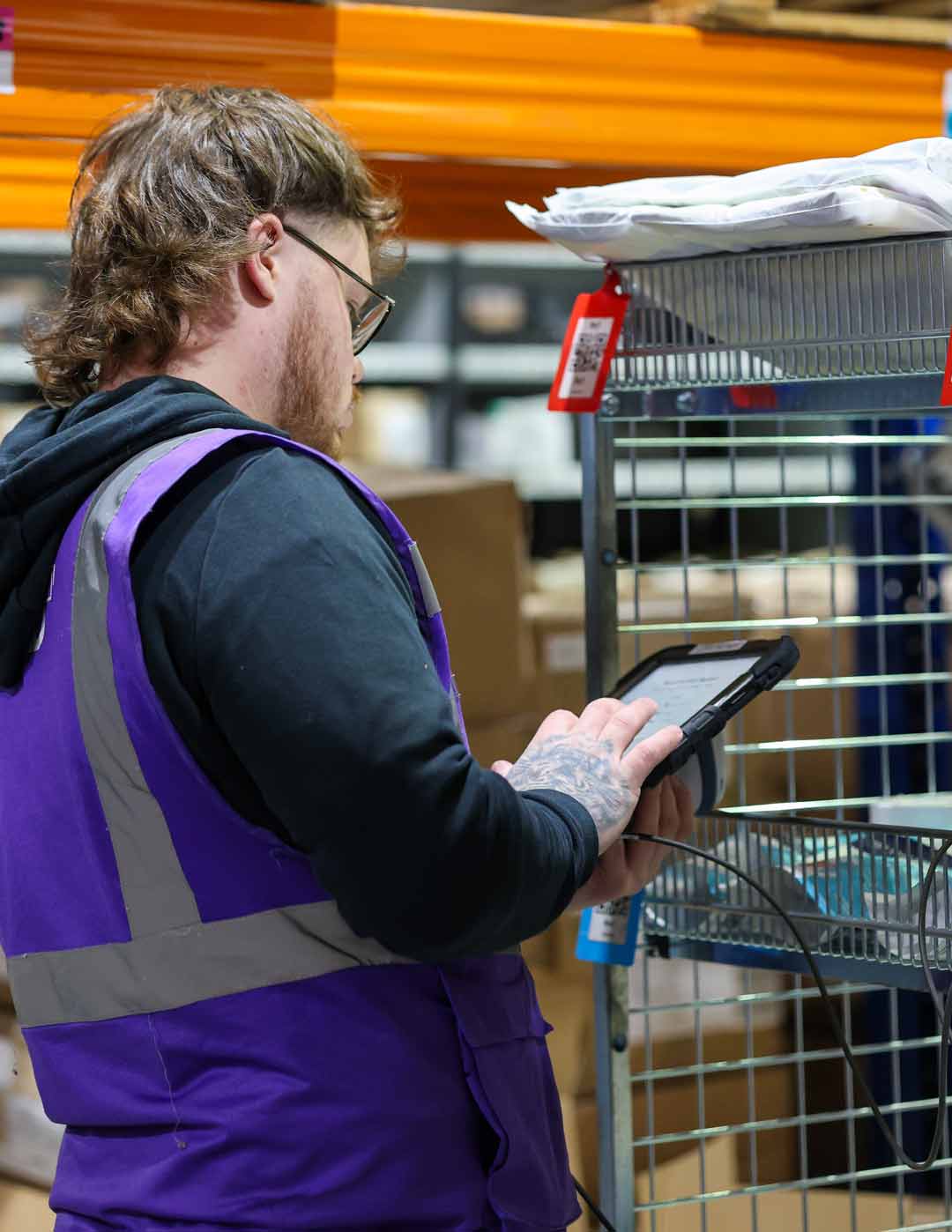
Most brands don't start out thinking about fulfilment. You start with a product you believe in, a store to sell it from, and the first orders get packed at the kitchen table. Then one day there are boxes stacked in the hallway, a backlog of orders waiting to go out, and a courier collection you're about to miss.
That's usually the point where eCommerce fulfilment stops being something you just get done and becomes something you need to get right.
It covers more ground than most people expect, from where your stock lives and how quickly orders leave the building to what happens when something comes back. Some brands keep it in-house for as long as they can, some use dropshipping, and plenty hand it over to a specialist third-party logistics (3PL) partner once it starts taking up more of their time than it should.
Get it right and fulfilment becomes a growth lever: faster delivery, fewer mistakes, happier repeat customers. Get it wrong and it quietly eats your margin and your reviews.
So what actually happens to an order once it leaves your checkout, and how do you know which setup is right for your brand?
Let's start with the basics.
What is eCommerce fulfilment?
Once a customer hits “buy” on your website, marketplace or TikTok Shop, the post-purchase part begins. That's eCommerce fulfilment. Getting the right product off the shelf, packed up and on its way to their door. Most of it happens out of sight, but customers notice quickly when something goes wrong.
In practice, eCommerce fulfilment means storing your stock, processing each order as it comes in, picking and packing it, handing it over to a courier and dealing with any returns. Whether you do it yourself or work with a fulfilment partner, those steps stay the same.
You'll often hear it used alongside a few other terms, and it helps to know how they all fit together:
- Shipping is one part of fulfilment, the bit where the packed parcel travels from the warehouse to your customer.
- Logistics is the bigger picture. It covers how stock moves through your whole supply chain, including getting it from your manufacturer to the warehouse in the first place.
- Order fulfilment means the same thing but applies to any kind of order, not just online ones.
- 3PL (third-party logistics) is what people call a company that handles fulfilment for you. If that one's new, here's "What is a 3PL" in a bit more detail.
So why does it matter so much?
For a direct-to-consumer brand, fulfilment is often the first time a customer gets something physical from you. They've seen your ads, browsed your site and paid, but the first thing they actually hold is the box that turns up. If it arrives late, damaged or with the wrong thing inside, that's what they remember, and it's usually what ends up in your reviews. When it arrives quickly and looks the part, it does a lot of the work of bringing them back.
How does eCommerce fulfilment work?
Whether you're packing orders in a spare room or working with a warehouse that ships thousands a day, every order goes through the same journey.
1. Connecting your sales channels
It starts with your store talking to the warehouse. Platforms like Shopify, WooCommerce, Magento and BigCommerce, along with marketplaces such as Amazon and TikTok Shop, connect to a warehouse management system (WMS). Orders drop in automatically the moment they're placed, and stock levels sync back so you're not selling something that's already gone.
2. Goods in
When stock arrives from your manufacturer, whether that's a few cartons or a full container, it gets unloaded, counted, checked against what you ordered and logged into the system. It's not the most exciting part of the process, but it matters more than you'd think. If the count is off at the start, you'll feel it later as an oversell or a product that's “in stock” but can't be found.
3. Storage and inventory management
Every product gets its own home in the warehouse, whether that's a pallet location, a shelf or a small pick bin. Bestsellers are kept close to the packing area so they can be picked quickly. For things like cosmetics or food, batch and expiry dates are tracked too, so the oldest stock goes out first.
4. Order processing
As orders come in, the system checks them, reserves the stock and groups them into batches so pickers aren't zigzagging across the warehouse. This is also where any rules you've set up kick in, like adding a free sample to first orders, including a gift note or choosing the right delivery service based on weight and destination.
5. Pick and pack
A picker collects each item and scans it to confirm it's the right product in the right quantity. The order is then packed into suitable packaging, along with any inserts or branded touches, before it's weighed and labelled. It sounds simple, but this is where small mistakes turn into refunds and bad reviews, which is why accuracy matters so much. Our pick and pack guide goes into more detail.
6. Dispatch and delivery
Packed orders are sorted by courier and collected the same day. Tracking details go back to your store and on to your customer, so they know exactly when to expect their parcel. Cut-off times play a big part here: the later your warehouse's cut-off, the later customers can order and still get it the next day.
7. Returns
Returns come back to the warehouse to be checked and graded, then restocked, refurbished or written off depending on their condition. Handled well, a return can still end in a happy customer who buys again. Our complete guide to returns management covers how to get it right.
If you want to go deeper into each stage, take a look at our article on the order fulfilment process.
The three types of eCommerce fulfilment
There's no single right way to fulfil orders. What works for you depends on how many orders you're shipping, what you sell, your margins and where you want the business to go.
In-house fulfilment
You store the stock and pack the orders yourself, whether that's at home, in a small unit or in your own warehouse. You have complete control, and for a young brand shipping a handful of orders a day it often makes sense. As you grow, though, it starts to takeover: more space, more people, more of your own time, and courier rates that don't really improve until you're shipping serious volume.
Dropshipping
Your supplier holds the stock and ships it straight to your customer. You don't need to buy inventory upfront, which is appealing, but you have very little say over packaging, delivery times or quality, and margins tend to be tight. It's a useful way to test products, but it's hard to build a brand on.
Outsourcing to a 3PL
A 3PL stores your stock and runs the whole fulfilment process from its own warehouse, using its own systems and the courier rates it has negotiated across all its clients. You still decide how your products are presented and packaged, but you're no longer the one doing the packing. Most growing DTC brands make this move once in-house fulfilment starts holding them back.
Put side by side, the trade-offs are fairly clear. In-house gives you full control but needs space, staff and your time, and it gets harder to scale. Dropshipping costs very little upfront, but you give up control over packaging, delivery and quality. A 3PL sits in the middle: you keep control of how your brand shows up, pay for what you use, and get access to courier rates you'd struggle to negotiate on your own.
Wondering whether it's time to make the move? It usually starts with small things: the stockroom is full, packing eats into time you'd rather spend on growth, mistakes creep in when it's busy, or you want to start selling abroad. Our article on the nine signs you need a 3PL goes through them in more detail.
How much does eCommerce fulfilment cost?
Fulfilment pricing can look confusing at first, mainly because it's rarely one number. A 3PL quote is made up of separate charges, each linked to a different part of the process. Once you know what each one covers, quotes become much easier to compare:
- Goods in: unloading, counting, checking and logging your stock when it arrives. Usually charged per pallet, carton, unit or hour.
- Storage: the space your stock takes up in the warehouse, charged per pallet, bin or cubic metre on a weekly or monthly basis.
- Pick and pack: collecting the items and packing each order. Normally priced per order, with a small extra charge for each additional item.
- Packaging: boxes, mailers, void fill and inserts. Sometimes included in the pick and pack fee, sometimes charged separately.
- Postage: delivery to your customer, priced per parcel based on weight, size and destination.
- Returns: receiving, checking and restocking anything that comes back, usually charged per return.
- Extras: jobs like kitting, labelling, gift wrapping or B2B orders, charged per task or by the hour.
Providers price these in different ways. Pay-as-you-go means your invoice moves up and down with your order volume. Fixed pricing is a set monthly fee, and tiered pricing gets cheaper as you grow. It's also worth asking about monthly minimums, setup fees and peak surcharges, as they don't always appear on the first page of a quote.
The most useful figure to workout is your total cost per order. Add up everything you'd pay in a typical month and divide it by the number of orders shipped. That gives you a fair way to compare providers, and to compare outsourcing with doing it yourself. For a full breakdown, read 3PL fulfilment costs explained and how much does fulfilment cost.
Couriers and delivery options in the UK and EU
Your fulfilment partner's courier network has a big say in how fast your orders arrive, what delivery costs and how the experience feels for your customer. In the UK, the names you'll come across most are Royal Mail, Evri, DPD, DHL, UPS and Parcel force. In mainland Europe, you'll see PostNL, DHL, DPD, GLS and more, along with each country's national postal service.
A good 3PL works with several carriers and chooses the best service for each order, based on its size, weight, destination and what you've promised at checkout. Most brands offer a standard tracked option for customers who are happy to wait a little longer, next-day delivery for those who aren't, and premium choices like named-day delivery for higher-value orders. If you sell internationally, the customs paperwork should be handled for you as part of the service.
Cut-off times are easy to overlook, but they make a real difference. A lot of online shopping happens in the evening, so a later cut-off means more of your customers can order after dinner and still have their parcel the next day. That's why SCEND runs a 9PM same-day dispatch cut-off. For more on picking the right carriers, see our guide to choosing a courier.
UK and EU fulfilment rules to know in 2026
Most fulfilment guides stop at the UK border. If you sell to customers in Europe, or you're planning to, there are a few rule changes worth knowing about because they affect how and where you fulfil orders. This is a general overview rather than legal or tax advice, so it's worth checking the detail for your own products with a customs or tax adviser.
Customs between the UK and EU
Since Brexit, every parcel going between Great Britain and the EU counts as an export and an import. That means customs declarations, possible import VAT and duty, longer delivery times and trickier returns. Our article on UK and EU fulfilment post-Brexit looks at what this means day to day.
The EU's new €3 duty on low-value parcels
Until recently, parcels worth less than €150 could enter the EU without customs duty. That changed on 1 July 2026, when the EU introduced a flat €3 duty on low-value eCommerce parcels coming from outside the EU. It's charged per type of item in the parcel, so a parcel with two different kinds of product would pay €6. The flat rate is a temporary measure, expected to run until 2028, when the EU plans to apply normal duty rates to all goods whatever their value. You can read more in our guide to EU de minimis changes in 2026.
The UK's £135 duty relief is ending
The UK is heading the same way. In July 2026, HMRC confirmed that the customs duty relief on goods worth under £135 will be removed, with low-value imports expected to become subject to duty by October 2028. The finer details, including rates, are still to be published.
EU packaging rules (PPWR)
The EU's Packaging and Packaging Waste Regulation (PPWR) came into effect on 12 August 2026, with different requirements phasing in over the next few years. One that matters directly for eCommerce brands: by 2030, no more than 50% of the space inside eCommerce packaging can be empty. Choosing the right size of box is quickly becoming a compliance question as well as a cost and sustainability one.
One hub or two? Fulfilling UK and EU orders
All of these changes come back to one question: where should your stock live? There are two main ways to approach it.
Shipping everything from the UK
Keeping all your stock in one UK warehouse makes inventory simple. The trade-off is that every EU order has to cross a customs border, which adds paperwork, delivery time and possibly duty and VAT. Since July 2026, parcels coming into the EU from outside also pick up the new €3 duty. If EU orders are only an occasional thing for you, this can still be the right setup.
Fulfilling from both the UK and the EU
With stock in a UK warehouse and an EU warehouse, UK orders ship from the UK and EU orders ship from within the EU. Your European customers get faster delivery with no surprise import charges at the door, and their returns stay local too. Stock moves between the two in bulk, so customs is dealt with once per shipment rather than on every single parcel.
This is how SCEND is set up, with a UK fulfilment centre in Derbyshire and an EU fulfilment centre in North Brabant in the Netherlands. Both run on the same systems, so you can see all your stock and orders in one place. You can find out more about our EU fulfilment centre launch.
The choice usually comes down to where your customers are. If most of your sales are in the UK and EU orders are only occasional, one UK hub keeps things simple. Once EU demand is growing, a second hub inside the EU tends to pay for itself through faster delivery, no import charges for customers and much easier returns, as long as you're happy to plan stock across two sites.
How to choose an eCommerce fulfilment partner
Your fulfilment partner ends up feeling like part of your team, so it's worth taking the time to find the right one. These are the questions worth asking before you sign anything:
- How accurate are they? Ask for their pick accuracy and same-day dispatch rates, and how they measure them.
- What's their cut-off time? The later it is, the more customers get next-day delivery.
- Do they connect with your sales channels? Check every platform you sell on now, and the ones you're planning to add.
- Where are their warehouses? Think about where your customers are, and whether you'll need EU or international support down the line.
- Is their pricing clear? Ask for a line-by-line quote based on your real orders, including any minimums or peak surcharges.
- How do they handle returns? Find out how quickly returns are checked and put back into stock.
- Do they know your sector? Beauty, food, fashion and electronics all need different handling and storage.
- Can you see what's going on? You should be able to check live stock levels, orders and performance whenever you want.
- Who else do they work with? Ask to speak to brands at a similar stage to yours.
For a longer checklist, take a look at seven things to ask your 3PL and what great operations look like in eCommerce fulfilment. If you're already with a provider that isn't keeping up, here's how to switch 3PL provider without disrupting your orders.
Frequently asked questions
What is eCommerce fulfilment?
eCommerce fulfilment is everything that happens after a customer places an order online: storing the stock, picking and packing the order, shipping it and handling any returns. Brands can do it themselves, use dropshipping, or work with a third-party logistics(3PL) provider that handles it for them.
What is fulfilment in eCommerce?
It's the post-purchase side of selling online, covering every step from the moment an order is placed to the moment the parcel arrives with the customer, plus any returns that come back afterwards.
How does eCommerce fulfilment work?
Your online store connects to a warehouse management system, so orders arrive at the warehouse automatically.Each order is picked, packed, labelled and handed to a courier, and tracking details are sent to your customer. If anything is returned, it comes back to the warehouse to be checked and restocked.
Is it fulfilment or fulfillment?
Both are correct."Fulfilment" is the UK spelling and "fulfillment" is the US spelling, and they mean exactly the same thing.
How much does eCommerce fulfilment cost?
It depends on how many orders you ship, the size and weight of your products, how many SKUs you have, your packaging and where you're sending orders. Most 3PL invoices include goods in, storage, pick and pack, packaging, postage and returns. The fairest way to compare providers is on your total cost per order.
What is a fulfilment fee?
It's what a 3PL charges to process an order, usually covering picking and packing. It's normally priced per order, with a small extra charge for each additional item. Storage, packaging and postage are usually billed separately.
How long does eCommerce fulfilment take?
With a good 3PL, orders placed before the daily cut-off are picked, packed and dispatched the same day. Delivery time then depends on the courier service, which for UK orders is typically next day on a tracked service.
How do you fulfil EU orders since Brexit?
You can ship EU orders from a UK warehouse, which means customs declarations, possible duties and longer delivery times, or you can keep stock in an EU warehouse so orders ship domestically within the EU. Many growing brands use both a UK and an EU warehouse to keep delivery fast for customers in each market.
How do I choose an eCommerce fulfilment partner?
Look at their accuracy and dispatch rates, cut-off times, platform integrations, warehouse locations, pricing, returns process and sector experience. It's also worth speaking to brands of a similar size that already work with them.
When should I outsource my eCommerce fulfilment?
Most brands outsource when doing it in-house starts to hold back growth, for example when they run out of space, spend too much time packing orders, struggle during busy periods or want to start selling in new markets like the EU.
Grow faster with the right fulfilment partner
Fulfilment is easy to think of as a back-office job, but your customers don't see it that way. It decides how quickly their order turns up, how your brand feels when they open the box, and how easily you can grow into new markets. SCEND provides eCommerce fulfilment services from both the UK and the EU for growing DTC brands, with integrations across all the major sales channels and a team that cares about your growth as much as you do.

.webp)
.webp)


