Container Receiving and Fast Stock Turnaround: What to Look for in a 3PL
You’ve got a container inbound. A launch date locked in. Marketing spend committed. Influencer seeding ready to go.
The one thing that can unravel all of it is a 3PL that can’t turn your stock around fast enough.
Container receiving and goods-in processing is one of the areas where 3PLs vary most dramatically, and where the difference between a capable provider and an average one shows up fastest. A slow goods-in process doesn’t just delay your launch. It compresses your dispatch window, creates stock visibility gaps, and puts you in the position of selling products you can’t yet ship.
This article breaks down what fast, reliable container receiving actually involves, what to ask a 3PL before your goods land, and how to set your launch up so that fulfilment doesn’t become the bottleneck.
What Container Receiving Actually Involves
When a shipping container arrives at a fulfilment centre, the clock starts. Here’s what needs to happen, and where it can go wrong.
Booking and coordination
Before the container arrives, your 3PL needs to have a confirmed booking slot. This sounds obvious, but it’s a common failure point.
A good 3PL will ask for container details in advance: number of pallets or cartons, product types, expected arrival window, any special handling requirements. That information allows them to allocate the right labour and equipment before the container arrives, not after.
Unloading and physical check
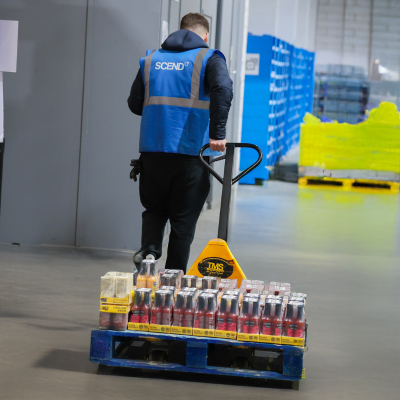
Once the container is docked, it needs to be unloaded, which for a full container can mean thousands of cartons. Speed here depends on the warehouse layout, the equipment available (forklift, pallet trucks, conveyor systems), and the labour allocated to the booking.
As stock is unloaded, it should be physically checked against your advance shipping notice (ASN). This is where discrepancies between what was shipped and what arrived are identified, short shipments, damaged cartons, incorrect SKUs. A 3PL that skips this step saves time on goods-in but creates problems downstream: inaccurate stock counts, orders fulfilled with the wrong product, inventory that doesn’t reconcile.
Processing and putaway
Once checked in, stock needs to be processed and put to location, scanned into the WMS, assigned to pick faces or bulk storage, and made available for orders. This is where a slow WMS or understaffed goods-in team creates the real bottleneck. Stock that’s physically in the building but not yet available in the system can’t be picked. For a launch where every hour counts, that gap matters.
Quality checks and prep
Depending on your product and how it’s been packed for shipping, stock may need additional processing before it’s ready to fulfil: labelling, re-boxing, quality inspection, kitting. If your 3PL can handle this as part of goods-in, rather than as a separate stage with its own queue, it significantly compresses your overall turnaround time.
What Fast Turnaround Actually Looks Like
“Fast goods-in” is a claim almost every 3PL makes. Here’s how to read past the marketing and understand what it means in practice.
Same-day or next-day availability means stock is scanned, processed, and available to pick within 24 hours of the container being unloaded. This is the benchmark for a launch-ready operation. If a provider is quoting three to five business days for stock to be available after goods-in, that’s a meaningful delay against a launch window.
Pre-receiving setup means your 3PL has your SKU list, your packaging specs, and your ASN loaded into the WMS before the container arrives. When stock lands, the system is ready, not waiting for someone to manually set up your products.
Dedicated goods-in resource means the team handling your container isn’t the same team picking live orders. Shared labour creates conflicts: a busy dispatch day can deprioritise goods-in, and a large inbound can slow down outbound. The better-run operations separate these functions.
Real-time inventory updates means you can see stock becoming available as it’s processed, not just a single update when the whole container is done. For a launch where you’re managing pre-orders or a timed release, knowing that 60% of your stock is live and pickable is valuable operational information.
Why This Matters More for Product Launches
A routine replenishment has some tolerance for a slower goods-in process. If stock takes three days to be available and you have two weeks of cover in the warehouse, the delay is absorbed.
A product launch has no such tolerance. The timeline is compressed by design, you’re shipping containers as close to launch as possible to minimise storage costs and the risk of stock sitting unsold. That compression means any delay in goods-in flows directly into your launch window.
The scenarios that derail launches almost always involve one of three things: stock arriving later than planned, stock taking too long to be processed, or stock not being available in the system even though it’s physically in the building. A 3PL with a robust goods-in process eliminates the second and third risks, leaving only the shipping variable outside their control.
There’s also the pre-order and influencer seeding dimension. Many brands use launch-period seeding, sending product to creators before the public release date, as part of their marketing strategy. That seeding stock needs to be identified, prioritised, and dispatched ahead of the main launch run. A 3PL that treats your inbound as a single undifferentiated batch can’t do this reliably. One with a flexible goods-in process can separate seeding allocations from main stock from safety stock before anything is put to location.
Questions to Ask a 3PL About Container Receiving
Before committing a launch to any 3PL, get specific answers to these:
– What is your goods-in turnaround time from container arrival to stock available? Push for a number, not a range.
– Do you require an advance shipping notice, and how far in advance?
– How do you handle discrepancies between the ASN and what arrives?
– Can you prioritise specific SKUs or allocations within a container?
– What is your dock booking process, and what happens if a container arrives outside the booking window?
– Do you have dedicated goods-in staff, or is it shared with dispatch?
– What does your WMS show me during goods-in processing?
What Good Looks Like: The SCEND Goods-In Process
At SCEND, goods-in is treated as a critical path, not an administrative function. Here’s how it works in practice.
Before your container arrives, we need your ASN: a full breakdown of what’s inbound by SKU, carton count, and expected arrival window. That information is loaded into our WMS ahead of the booking, so when stock lands, the system is ready to receive it.
We book container arrivals in advance to ensure dock space and the right labour allocation are confirmed before the lorry arrives. When the container is unloaded, stock is checked against your ASN in real time, discrepancies are flagged and reported before goods go to location.
Processing and put away targets same-day or next-day availability for standard inbounds. For launch scenarios, we work with you to prioritise allocations — seeding stock, pre-orders, phase-one release, so that the right product is available to pick in the right order from the moment goods-in is complete.
Throughout the process, you have live visibility of your inbound in our client portal. You can see what’s been received, what’s been processed, and what’s available to pick, without needing to chase an update.
Frequently Asked Questions
What is an advance shipping notice (ASN) and why does it matter for goods-in?
An ASN is a document you send your 3PL ahead of a delivery, detailing exactly what’s inbound: SKUs, quantities, carton counts, and expected arrival date. It allows the warehouse to prepare, allocating dock space, labour, and system setup before the container arrives. Without an ASN, goods-in becomes reactive and slower. For launch scenarios where turnaround time is critical, an ASN is essential.
How long should goods-in take for a full container?
A well-run goods-in operation should be able to unload, check, process, and make a standard container available to pick within 24 to 48 hours of arrival, depending on the number of SKUs and whether any additional prep (labelling, kitting, QC) is required. If a provider is quoting longer than 48 hours for a straightforward inbound, ask why.
What happens if my container arrives with discrepancies?
A 3PL with a proper goods-in process will check your delivery against the ASN on arrival and report discrepancies before goods go to location. You should receive a goods-in report detailing what was received, any shortages, any damage, and any product that failed QC. If your current or prospective 3PL doesn’t produce this report, that’s a gap worth addressing.
Can a 3PL handle container receiving directly from the port?
Some 3PLs can coordinate collection from port of entry — managing the drayage from the container terminal to their warehouse. This simplifies your logistics chain by removing a step. Ask your provider whether they offer this or can recommend a trusted drayage partner if not.
What’s the difference between goods-in and a bonded warehouse?
A standard goods-in process receives stock that has already cleared customs and duties. A bonded warehouse holds stock that hasn’t yet cleared — deferring duty payment until the goods are released. If you’re importing from outside the UK or EU and want to manage your duty liability, a bonded warehouse solution may be relevant. Not all 3PLs offer this, so it’s worth asking.
Final Thoughts
For any brand running a product launch, the goods-in process is the critical path that everything else depends on. Marketing timelines, pre-order commitments, influencer seeding, paid campaign go-live, all of it sits downstream of stock being available to pick.
The 3PL question to ask isn’t just “can you receive containers?” Almost all of them can. The question is: how fast, how reliably, and with what visibility? Those are the details that separate a 3PL built for launch scenarios from one that will slow you down at the worst possible moment.
If you have a container inbound and want to understand how SCEND handles goods-in for launch scenarios, talk to the team (scend.com/contact). We’ll walk you through the process and what we’d need from you to turn your stock around fast.
Related reading
– Goods In
.webp)
.webp)


