Retail-Ready: How DTC Brands Break Into B2B Without Breaking Their Operations
You built your brand direct. You control the customer relationship, the unboxing experience, the margins. DTC has worked, and now a buyer at a major retailer has come knocking.
Or maybe you're thinking about it yourself. Wholesale feels like the next logical step. More volume, more visibility, more revenue channels.
But here's what most DTC brand founders don't expect: B2B orders don't just look different to your customers. They look completely different to your operations.
Getting it wrong doesn't just cost you a sale. It can cost you the relationship, and in wholesale, relationships are everything.
This guide breaks down what it actually takes to move from DTC into B2B or wholesale retail, what your fulfilment operation needs to handle it, and why most growing brands bring in a 3PL to manage the transition without losing control of their core eCommerce business.
Why DTC Brands Are Moving Into Wholesale
The economics are compelling. A single B2B order can be worth more than hundreds of DTC transactions. Retail shelf space puts your brand in front of customers who would never have found you online. And diversifying your revenue channels reduces your dependence on paid social and the algorithm.
But the shift isn't just commercial. It's operational. And that's where things can unravel fast.
What Makes B2B Fulfilment Different to DTC
If you're used to shipping individual consumer orders, B2B is a different discipline entirely. Here's what changes.
Order size and frequency
Where a DTC order might be one or two items, a wholesale order might be 500 units going to a single retail partner — or a recurring weekly replenishment across multiple stores. Your pick and pack process, your storage allocation, and your stock management all need to scale up without compromising the DTC side of your business.
Retail compliance requirements
Retailers are specific. Often very specific. They have their own requirements for how products arrive: labelling, barcoding, carton configurations, pallet formats, delivery windows. Miss one spec and you risk chargebacks, fees retailers levy against brands for non-compliant deliveries. These can be significant, and they add up quickly.
This is what retail-ready packaging means in practice. It's not just about your product looking good on shelf. It's about arriving in the right format, at the right time, with the right documentation. Every time.
Lead times and scheduling
Consumers expect fast. Retailers expect reliable. Rather than same-day or next-day dispatch, B2B often involves scheduled delivery windows that align with a retailer's intake processes. Being late isn't just frustrating, it can result in your stock sitting in a holding bay, rejected, or incurring additional fees.
Documentation and compliance
Purchase orders, delivery notes, invoices, advance shipping notifications, the paperwork that comes with B2B is more complex than DTC. Systems that work fine for consumer fulfilment often aren't set up for this level of documentation.
The Risks of Trying to Handle Both In-House
Many brands try to absorb B2B into their existing operation. It's understandable. You know your product. You've built your process. How different can it be?
The honest answer: very.
The most common problems we see when DTC brands try to bolt on wholesale in-house are:
Inventory conflict. Stock committed to a wholesale order gets picked for a DTC order (or vice versa). Suddenly you're short on both sides.
Errors on retail compliance. A shipment goes out without the correct labelling or barton configuration. The retailer raises a chargeback. The relationship gets off to a rocky start.
Capacity crunch. Your team is set up to process consumer parcels efficiently. Suddenly they're repacking bulk units to retailer spec on top of the daily DTC run. Something gives.
Slow response time. A retail buyer has a question about an incoming delivery. Your eCommerce ops team are in the middle of BFCM prep. Nobody picks it up quickly enough.
None of these are disasters on their own. But they compound. And in B2B, trust takes time to build and seconds to damage.
What Your Fulfilment Operation Actually Needs
To run DTC and B2B side by side without friction, your operation needs to be able to handle:
Inventory separation and allocation. Stock reserved for wholesale needs to be clearly segmented from your eCommerce pool. Without this, you're managing two channels against the same inventory and hoping nothing clashes.
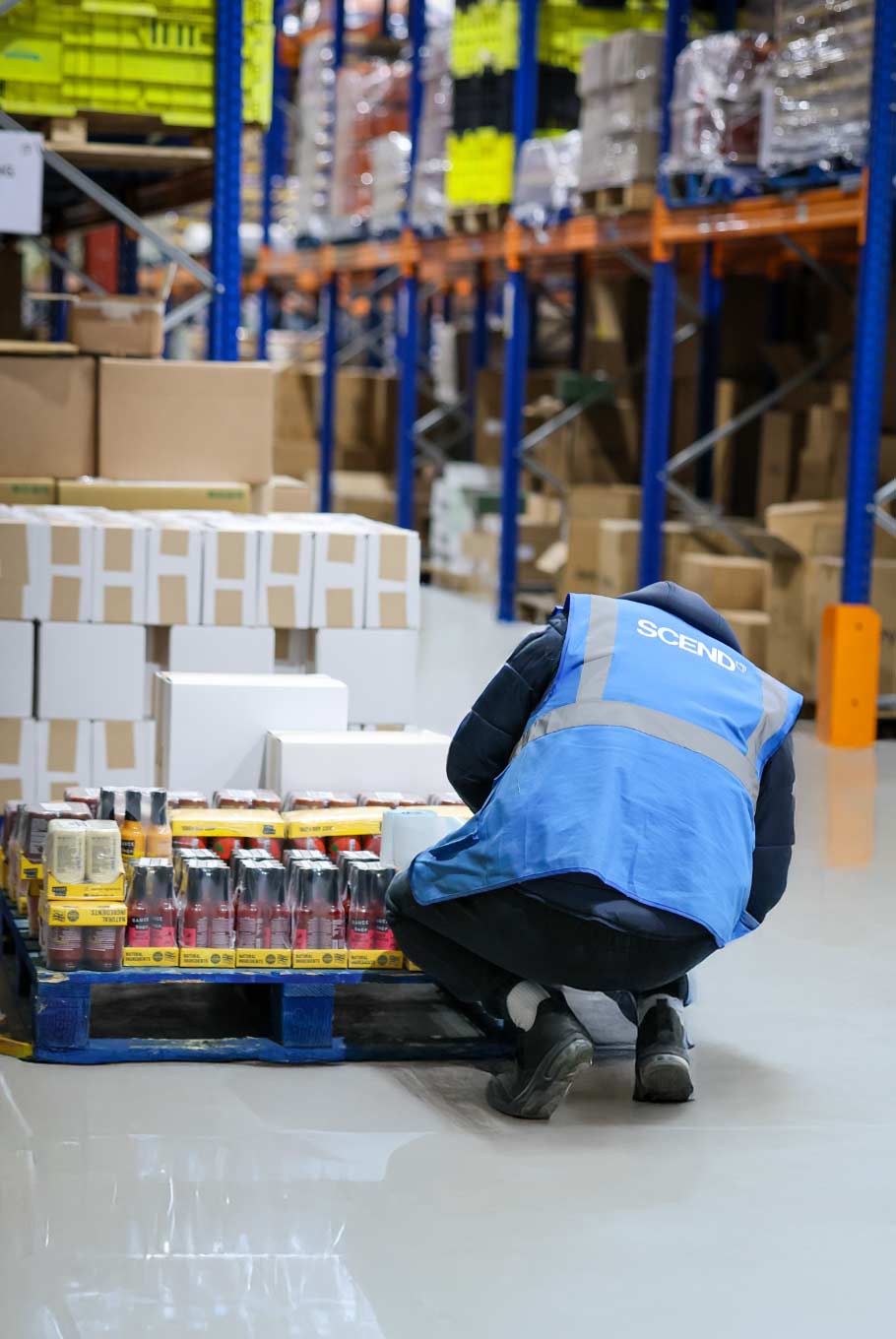
Retail prep capabilities. This goes beyond standard pick and pack. Retail-ready orders often require re-labelling, barcode application, specific carton configurations, pallet wrapping, and compliant documentation. Contract packing services exist precisely for this, specialist labour and equipment to prep your products to retailer spec.
Flexible order management. Your systems need to handle bulk orders, scheduled despatch, and multiple delivery destinations alongside your standard eCommerce flow, ideally without manual workarounds.
Compliance knowledge. Different retailers have different requirements. ASOS has different specs to Boots, which are different again from Ocado or Next. A good fulfilment partner will already know the requirements for the major retailers you're likely to work with, or will find out before your first shipment goes wrong.
How a 3PL Makes the Transition Manageable
A third-party logistics provider with B2B experience doesn't just add capacity. It adds infrastructure you'd otherwise have to build from scratch.
At SCEND, we handle both DTC eCommerce fulfilment and B2B retail prep under one roof. That means your wholesale orders and your consumer orders are managed from the same inventory, with clear allocation and separation,no double-handling, no guesswork.
Our B2B fulfilment service covers everything from goods in and retail-ready prep through to scheduled despatch and documentation. We're experienced in working to retailer compliance requirements, so your first shipment to a new account arrives correctly and on time.
And because we manage your full fulfilment operation, not just one channel, adding B2B doesn't mean disrupting your eCommerce performance. Both run in parallel, from the same stock, with the same visibility.
Is Your Brand Ready for Wholesale?
Not every DTC brand is ready to move into B2B, and that's fine. But if you're at the stage where the conversation is serious, a buyer has expressed interest, or you're actively exploring the channel, it's worth getting your operations right before you commit.
The questions to ask yourself:
- Can your current operation handle a bulk order without disrupting your DTC fulfilment?
- Do you understand the compliance requirements of the retailers you're targeting?
- Is your inventory management system set up to handle stock allocation across multiple channels?
- Do you have the capacity for retail prep, labelling, repackaging, documentation, at scale?
If the answer to any of those is uncertain, now is the time to get the right fulfilment partner in place.
Final Thoughts
Breaking into wholesale is a genuine growth move for a DTC brand. But the fulfilment side of it is more complex than most founders anticipate. Retail compliance, inventory management, bulk order processing , these aren't add-ons. They're requirements.
Getting your operations sorted before your first major wholesale order, rather than after your first chargeback, is the difference between a channel that accelerates your growth and one that quietly drains it.
If you're thinking about making the move, talk to the team at SCEND. We'll walk you through what your fulfilment operation needs to look like to handle both channels confidently.
Related reading:
- B2B Fulfilment: How It Works, Why It Matters & 3PL Role
- eCommerce Fulfilment
- Contract Packing
- The 3PL Process
.jpeg)
.webp)
.webp)


