B2B Fulfilment: How It Works, Why It Matters & 3PL Role

In today’s global economy, order fulfilment directly influences how businesses perform. Companies no longer compete only on product quality or price. The speed, reliability, and flexibility of their logistics operations often determine success.
Nowhere is this more evident than in B2B fulfilment. B2B businesses supply products and services to other companies. B2B operations require scale, customisation, and strategic coordination.
Combined with third-party logistics providers (3PLs), effective B2B fulfilment becomes a competitive advantage. Businesses that understand B2B logistics build stronger client relationships.
This article explores what B2B fulfilment really is. It also explores how it differs from B2C, the challenges it presents, and why 3PL partners are key to success.
What Is B2B Fulfilment?
B2B fulfilment refers to the process of receiving, processing, and delivering orders from one business to another. These transactions often involve wholesalers, distributors, manufacturers, and retailers. Buisnesses working together to keep supply chains moving. B2B fulfilment involves bulk shipments, recurring orders, and compliance with agreements.
A B2B fulfilment process typically covers several key stages.
These are:
- order verification,
- processing and customisation,
- packaging,
- delivery scheduling,
- post-delivery support.
Each stage must be carefully managed. Even small errors can disrupt entire supply chains and damage valuable partnerships.
The complexity of global commerce has pushed many brands to outsource these responsibilities to 3PLs. These specialists manage warehousing, transportation, and order fulfilment on behalf of businesses. This allows them to scale efficiently while focusing on their core operations.
How B2B Fulfilment Differs from B2C
While both fulfilment types share the same goal. Delivering products on time and in good condition. The differences between B2B and B2C are substantial.
In B2C, consumers typically purchase smaller quantities and expect fast, often next-day delivery. The emphasis is on speed and convenience. B2B is centred around precision, reliability, and long-term business relationships. Orders are much larger, recurring, and tailored to the client’s exact specifications.
Delivery timelines also differ. Businesses rarely demand immediate shipment in the way individual consumers do. Instead, they expect reliable, scheduled deliveries that align with their needs. In this sense, predictability is often more important than speed.
Another major difference lies in the nature of the customer relationship. B2C companies may rely on thousands or millions of individual customers for revenue. While B2B relationships are usually fewer in number but much higher in value. Maintaining trust through flawless fulfilment is therefore critical.
This is where B2B logistics strategies and 3PL partnerships become indispensable.
The B2B Order Fulfilment Process
The process of B2B order fulfilment is far more intricate than B2C. This is due to order size, compliance requirements, and customisation. Typically, it begins with receiving and verifying a purchase order. Once confirmed, businesses check inventory levels and allocate stock to match the order.
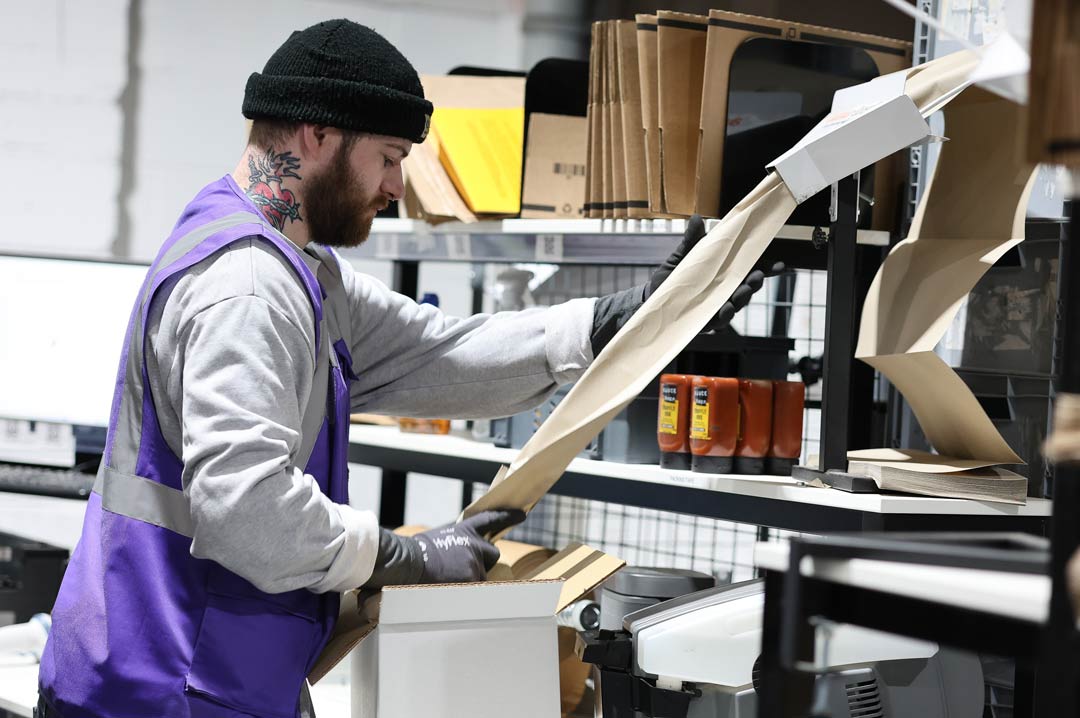
The next stage often involves customisation. For example, a distributor may require specific labelling, packaging, or product kits tailored to a client. These requirements demand flexibility and attention to detail. Particularly when managing hundreds of large accounts simultaneously.
After packaging comes logistics coordination. Deliveries are usually scheduled in advance, often requiring integration with the client’s own systems. These ensure just-in-time arrivals. Missed deadlines or incorrect shipments can disrupt entire production schedules or retail launches.
Finally, post-delivery support is vital. Businesses need to provide updates, resolve issues quickly, and maintain ongoing communication. This level of service is fundamental to long-term partnerships in the B2B space.
For many organisations, managing this complex process internally can be overwhelming. Partnering with a 3PL provider ensures access to warehousing expertise. As well as advanced tracking systems, and scalable logistics operations. All of which are tailored specifically to B2B needs.
The Importance of Inventory Management in B2B Logistics
In B2B fulfilment, inventory management plays a central role. Because orders are typically larger and more frequent, even small errors can result in costly disruptions. Businesses must balance stock availability against the risk of overstocking. This ties up capital and storage space.
Best practices for inventory management include:
Regular audits, demand forecasting, and maintaining buffer stock to accommodate unexpected surges. However, manual methods are no longer sufficient for modern supply chains. Companies rely on real-time tracking systems to monitor inventory across multiple locations.
Here again, 3PL partners provide an advantage. Most established 3PLs invest in advanced inventory management technology. Offering businesses visibility into stock levels and order statuses through integrated dashboards. This level of transparency ensures B2B clients receive accurate, timely deliveries.
Challenges in B2B Fulfilment
While B2B fulfilment offers growth opportunities, it also presents unique challenges.
One of the most significant is logistics complexity. Managing multiple suppliers, warehouses, and transport routes requires careful coordination. Even a single miscommunication between stakeholders can cause delays. These often ripple through the supply chain.
Another challenge is inventory accuracy. If systems are not synchronised, businesses risk sending incorrect orders. They can also overcommit stock, or fail to meet client deadlines.
Finally, client diversity adds further complexity. No two business clients have the same needs. Many require customised solutions that stretch beyond standard fulfilment models. Packaging variations, compliance requirements, and delivery schedules must all be tailored.
Outsourcing these challenges to a skilled 3PL provider can make a substantial difference. With established infrastructure and expertise, 3PLs streamline processes. Absorbing much of the operational risk associated with B2B fulfilment.
Technology and Automation in B2B Fulfilment
Technology has become the backbone of efficient B2B logistics. Automated systems reduce manual errors. They also accelerate order processing, and provide real-time visibility into supply chains. ERP systems allow businesses to integrate order management, track inventory and ship from one platform.
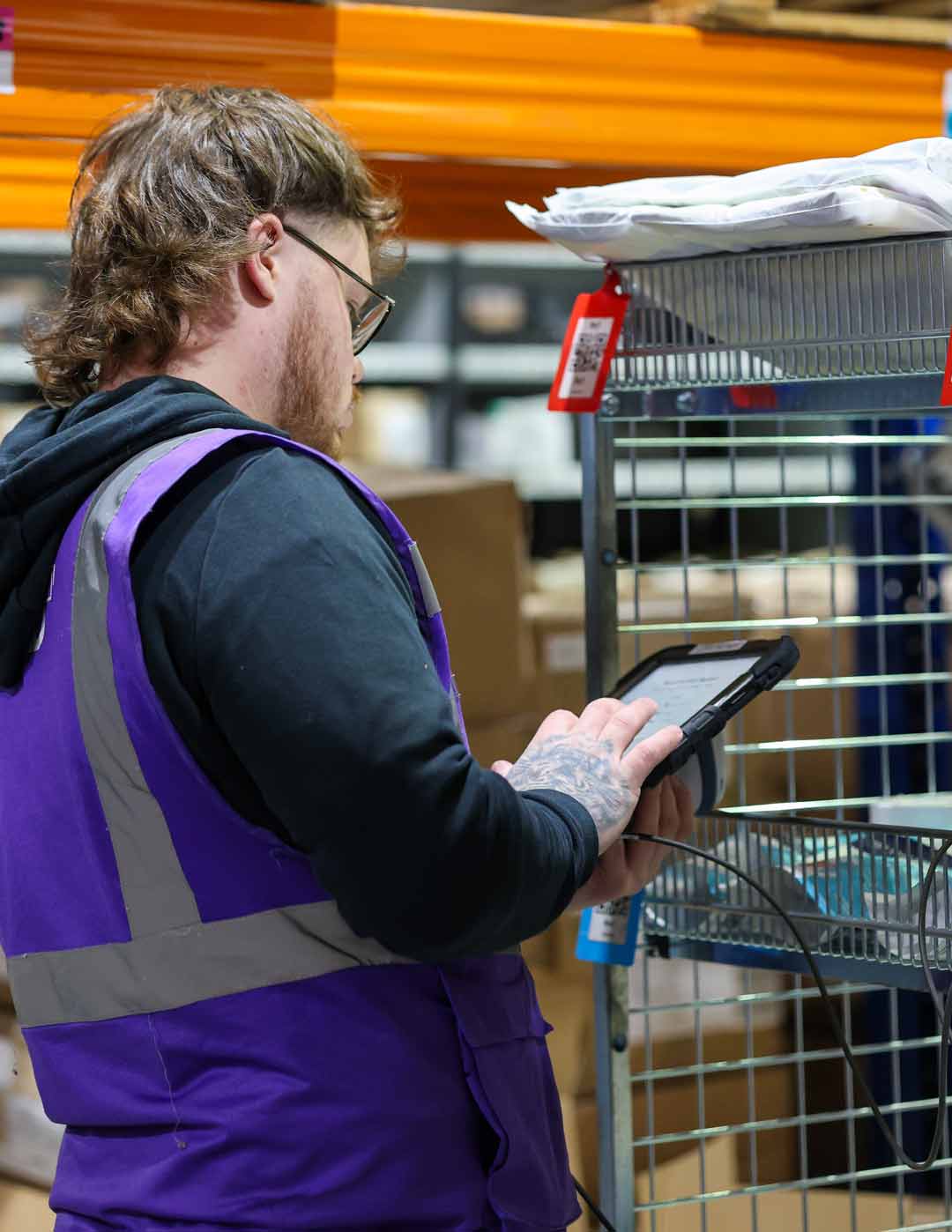
Automation also plays a key role in warehouse operations. Technologies reduce human error and speed up fulfilment. From robotic pick-and-pack systems to barcode scanning and automated labelling. Data analytics further enhances demand forecasting. This helps businesses predict client needs and adjust stock levels accordingly.
For companies that are unable to get these technologies, 3PL partners offer access to advanced tools. By leveraging these systems, businesses improve fulfilment accuracy and customer satisfaction.
Best Practices for Effective B2B Fulfilment
Success in B2B fulfilment requires more than just efficient logistics; it demands a strategic approach. First and foremost, communication is critical. Open, transparent dialogue between suppliers, warehouses, logistics providers, and clients reduces misunderstandings. Ensuring standards are met.
Accuracy is equally important. Maintaining precise records of inventory and order statuses minimises costly errors. Businesses should also adopt proactive quality control measures to ensure compliance and consistency.
Training staff and embracing continuous improvement are also essential. The logistics industry evolves quickly. Businesses must remain agile by adopting new technologies and adapting processes as needed.
When combined with a 3PL provider, these practices create long-term success. The result is a fulfilment process that meets client needs. As well as positioning the business as a trusted, reliable partner in the supply chain.
Why 3PL Is Essential for Modern B2B Logistics
The role of third-party logistics providers has expanded significantly in recent years. As supply chains become more complex, businesses increasingly turn to 3PLs to handle everything. From warehousing and inventory management to transportation and last-mile delivery.
By outsourcing to a 3PL, companies gain access to established infrastructure. Including cutting-edge technology and logistics expertise. All without having to invest heavily in their own facilities. This flexibility is valuable for B2B businesses that deal with changing demand or seasonal peaks.
Moreover, 3PLs often operate on a global scale, enabling businesses to expand into new markets. All without the burden of building local logistics networks from scratch. This agility is critical for companies seeking to remain competitive in fast-changing industries.
Ultimately, 3PLs allow businesses to focus on what they do best. Whether that’s manufacturing, retail, or distribution. Leaving the complexities of B2B fulfilment and logistics to specialists.
Conclusion: The Strategic Value of B2B Fulfilment
In today’s competitive marketplace, effective B2B fulfilment is not just a back-office function; it’s a strategic driver of growth. Companies that master B2B reduce costs, and gain an advantage over competitors.
The challenges are real. Complex logistics networks, demanding clients, and the need for precise inventory management. But with the support of a 3PL, these challenges can be transformed into opportunities.
Businesses that invest in optimising their fulfilment processes set the stage for growth. By prioritising reliability, accuracy, and partnership-driven logistics, companies ensure they meet client expectations. And consistently exceed them.
.webp)
.webp)


