Warehousing and Fulfilment Services: How Storage and Order Fulfilment Work Together

Warehousing and fulfilment services cover everything that happens to your stock between arriving at a warehouse and reaching your customer: goods in and inspection, secure storage, inventory management, pick and pack, dispatch and returns. Storage keeps stock safe, organised and ready to sell. Fulfilment turns it into delivered orders.
Most eCommerce brands start out storing stock wherever there is room: a spare bedroom, a garage, a small unit on an industrial estate. It works until orders pick up. Stock gets harder to find, mistakes creep in, and every hour spent packing boxes is an hour taken away from growing the business.
That is usually the moment founders start looking for warehousing and fulfilment services. This guide explains what those services include, how storage and order fulfilment fit together, how storage is priced, and what to look for in a partner, whether you sell in the UK, the EU or both.
What is the difference between warehousing and fulfilment?
Warehousing is about holding stock. A warehouse receives goods, stores them safely and keeps track of where everything is. Fulfilment is about moving stock. A fulfilment centre takes each customer order, picks the right items, packs them and hands them to a courier.
Traditional warehouses are built for bulk, with full pallets in and full pallets out, often to retailers. An eCommerce fulfilment centre is built for a high volume of small orders, with stock laid out so single items can be picked quickly, hundreds or thousands of times a day.
Online brands need both, and they work best under one roof. When storage and order fulfilment sit with the same partner, stock never has to be moved between sites before it can be sold, and your inventory figures stay accurate because one system tracks every unit from arrival to dispatch.
What do warehousing and fulfilment services include?
A full-service 3PLwill usually handle seven stages of your stock's journey.
1. Goods in and inspection
Stock arrives by pallet, carton or container. It is counted, checked against your purchase order, inspected for damage and booked into the warehouse management system (WMS). Speed matters here, because stock waiting on the loading dock cannot be sold. Ask any provider for their average time from receipt to stock being available. See how goods in works at SCEND.
2. Storage
Once booked in, every SKU gets a fixed location. Fast sellers sit closest to the packing stations, while slower lines and back stock go into higher racking or pallet locations. Good fulfilment storage is secure, well organised and flexible enough to grow and shrink with your sales.
3. Inventory management
The WMS records every stock movement, giving you live stock levels, batch and expiry tracking where you need it, and low-stock alerts. It syncs with your online store so you do not sell stock you do not have, and regular cycle counts keep the system and the shelves in agreement. Read more about inventory management.
4. Pick and pack
When an order comes in through Shopify, Amazon or any other connected channel, it drops into the WMS automatically. A picker collects the items, each one is scanned to confirm the right product and quantity, and the order is packed in your chosen packaging with any inserts or gift notes. Our pick and pack service covers this in detail.
5. Dispatch
Each parcel is labelled with the courier service that matches its destination and your delivery promise, then collected the same day when the order lands before the cut-off.
6. Returns
Returned parcels are received, inspected and graded. Sellable stock goes straight back into inventory, and damaged items are set aside and reported so you can decide what happens next. Find out more about returns management.
7. Value-added services
Many brands also need kitting, gift sets, subscription boxes, labelling or reworks. Having this done in the same building as your storage means stock does not need to travel to a separate co-packer and back. See our contract packing service.
How do storage and order fulfilment work together?
Follow a single order through a joined-up operation and the link between the two becomes clear.
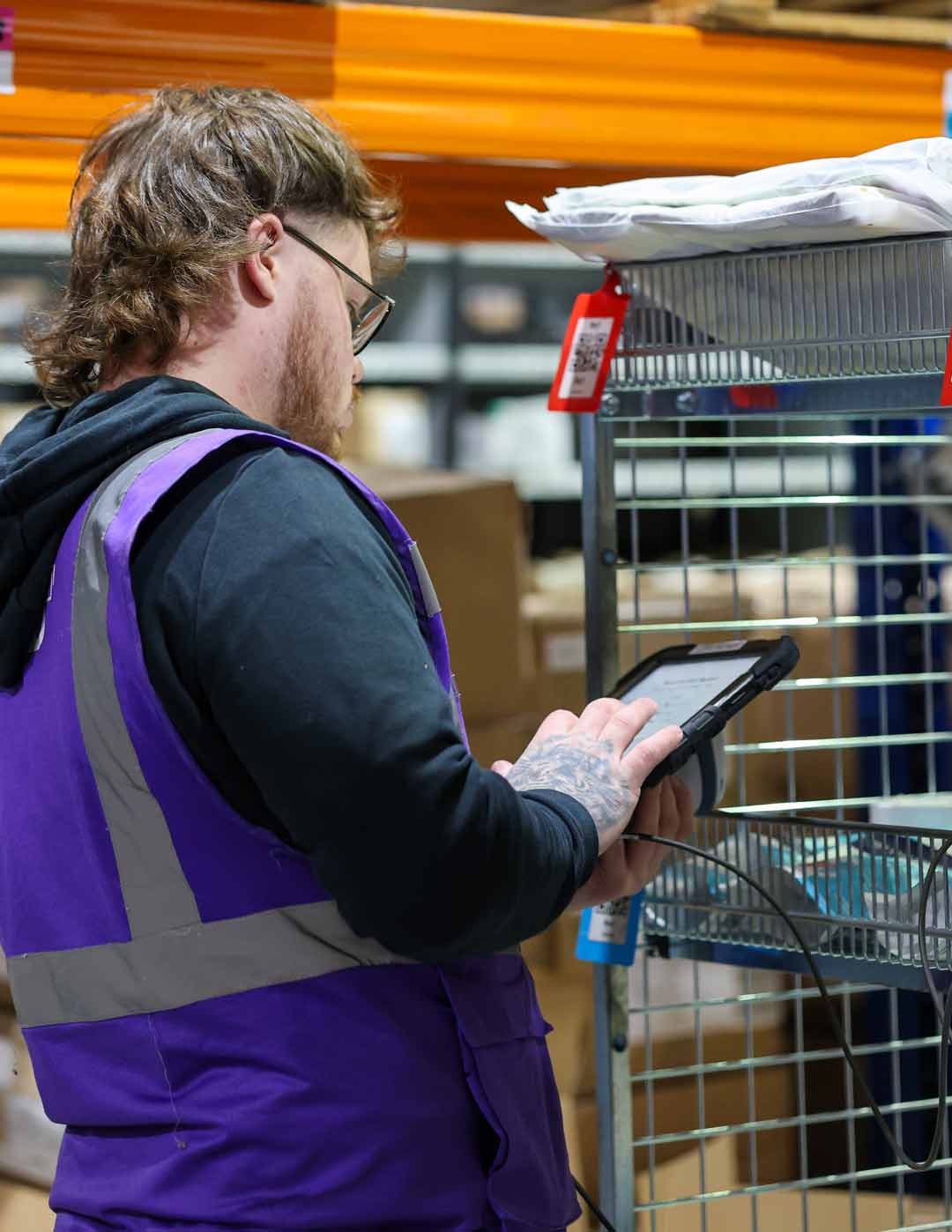
A customer buys a moisturiser and a cleanser from your website at 6pm. The order reaches the WMS within minutes. Because both products sit in mapped pick locations, the picker's handheld device routes them to each item by the shortest path. Each item is scanned, stock levels update instantly in the WMS and on your store, and the order is packed, labelled and on a courier van that evening.
Every step depends on storage being done well. If goods in is slow, the product is not available to sell. If locations are wrong, picks take longer and errors creep in. If inventory is inaccurate, you oversell and disappoint customers. Strong storage is what makes fast, accurate fulfilment possible.
How is fulfilment storage priced?
Storage is usually charged on the space your stock takes up, measured in one of three ways:
- Per pallet, typically per week, for bulk and back stock.
- Per shelf or bin location, for smaller items held in pick locations.
- Per cubic metre, which suits brands with a mix of product sizes.
On top of storage, most 3PLs charge separately for goods in, pick and pack, packaging and postage. Some also add account management fees, minimum monthly spends or long-term storage fees for slow-moving stock, so read the rate card closely.
The model to look for is one where you only pay for the space you use. Seasonal brands in particular should check they can scale storage back down after peak without a penalty. Our guide to 3PL fulfilment costs in the UK breaks every charge down, or you can request SCEND pricing.
UK and EU storage: where should your stock sit?
Where your stock is stored decides how quickly and how cheaply you can deliver. Since Brexit, sending parcels from the UK to EU customers has meant customs paper work on every order. Since 1 July 2026, the EU has also ended its duty exemption for parcels under €150, replacing it with a temporary flat duty of €3 per item category, with full standard duties expected from 2028. Our EU de minimis guide explains the change.
Holding stock in both a UK and an EU fulfilment centre takes most of that friction away. Bulk stock clears customs once on its way into the EU, then orders travel to European customers as domestic deliveries, while UK orders ship from the UK.
The important part is keeping both sites in one system. One inventory view lets you see stock across both markets, plan replenishment from a single dashboard and avoid juggling two separate providers. For the full picture, read our guide to UK and EU fulfilment post-Brexit.
What should you look for in a warehousing and fulfilment partner?
These are the questions worth asking before you move any stock:
- How fast is stock booked in? Slow goods in means lost sales after every delivery, especially during peak.
- How accurate is your inventory? Ask for their inventory accuracy figure and how often they run cycle counts.
- Can storage flex with my sales? You want room to grow into without paying for empty space in quieter months.
- Which platforms do you integrate with? Your store, marketplaces and the WMS should sync automatically.
- How secure is the site? Look for CCTV, controlled access and recognised accreditations.
- Can you store stock in the UK and the EU? If Europe is part of your growth plan, one partner across both markets saves a lot of admin.
- How did you handle last peak? Ask for client references from brands that have been through Black Friday and Christmas with them.
How SCEND handles storage and fulfilment
SCEND runs two fulfilment centres. Our UK fulfilment centre is in Derbyshire, in the centre of the country with direct access to major transport routes. Our EU fulfilment centre is in North Brabant in the Netherlands, close to the ports of Rotterdam and Antwerp. Both run on the same fulfilment software, so UK and EU stock sit in one inventory and reporting view.
New stock moves fast, with an average goods-in time of under 8 hours from receipt to booking in. Every delivery gets a visual inspection for damage, and any issues are flagged straight away. Once stock is stored, our WMS maintains 99.9% inventory accuracy and syncs via API with Shopify, WooCommerce, Magento, BigCommerce, Amazon,TikTok Shop and more.
Both sites are monitored around the clock with CCTV, and our UK fulfilment centre is ISO accredited. You only pay for the storage space you use, with room to scale up for peak and back down afterwards. Kinnerton came through back-to-back Christmas and Easter peaks with us without a hitch. Read the Kinnerton story.
Want to see how your stock would sit with us? Explore our storage and warehousing service or talk to the team.
Frequently asked questions
What are warehousing and fulfilment services?
Warehousing and fulfilment services are outsourced logistics services that store your eCommerce stock and process your customer orders. They cover goods in and inspection, secure storage, inventory management, pick and pack, dispatch and returns, usually provided by a 3PL from a single fulfilment centre.
What is the difference between storage and order fulfilment?
Storage is holding stock safely and keeping track of where it is. Order fulfilment is turning that stock into delivered orders by picking, packing and shipping each one. For online brands the two work best under one roof, because the same system tracks stock from arrival to dispatch.
How is fulfilment storage priced in the UK?
Most UK 3PLs charge for storage per pallet, per shelf or bin location, or per cubic metre, usually on a weekly basis. Goods in, pick and pack, packaging and postage are charged separately. Look for a model where you pay only for the space you use and can scale down after peak.
Do I need a minimum amount of stock to use a fulfilment warehouse?
It depends on the provider. Some 3PLs set minimum order volumes or a minimum monthly spend, while others are set up to support growing brands. Ask about minimums, contract length and notice periods before you sign.
Can I store stock in both the UK and the EU?
Yes. Brands selling into both markets can split stock between a UK and an EU fulfilment centre so orders ship domestically in each market. SCEND runs fulfilment centres in Derbyshire, UK and North Brabant, Netherlands, with both sites in one inventory system.
How quickly is stock available to sell after it arrives at a warehouse?
It varies between providers, from a few hours to several days. At SCEND, the average goods-in time from receipt to booking in is under 8 hours, so new stock is ready to sell quickly.