What Great Operations Look Like in eCommerce Fulfilment.
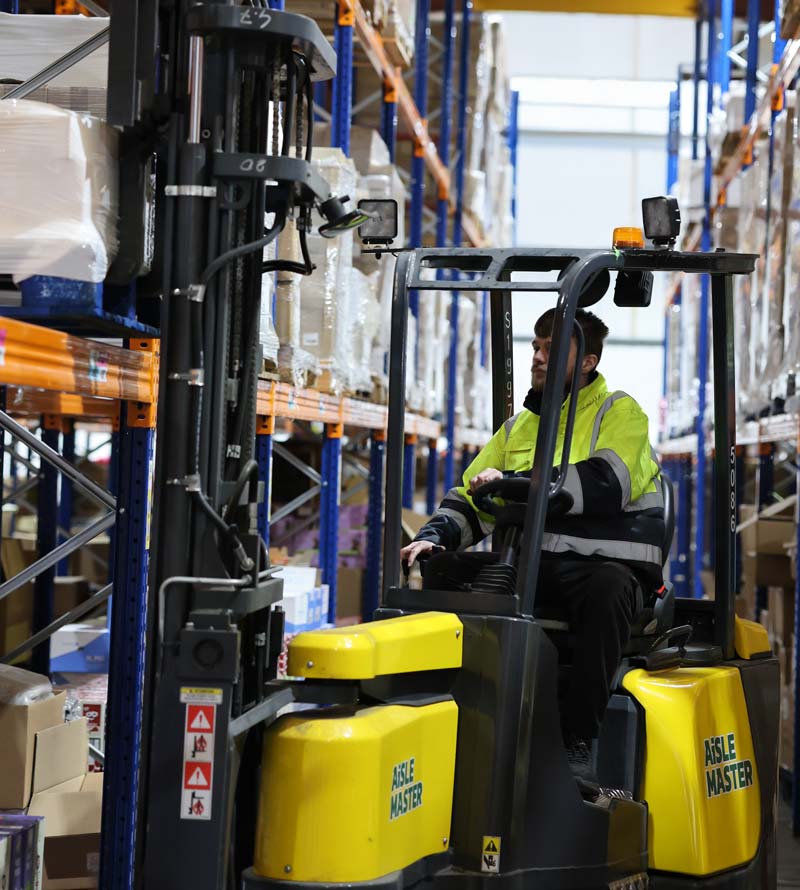
Most founders don't think about operations until something breaks. A pallet goes missing during Black Friday. A customer gets someone else's order. A 3PL quietly misses its dispatch cut-off three days running, and reviews start to slide before anyone in the business notices why.
That's the thing about great operations: when they're working, they're invisible. Orders leave the warehouse on time, inventory counts match reality, and returns get processed without a founder having to intervene. The brand gets to focus on product and marketing, because fulfilment is simply handled.
This guide breaks down what great eCommerce fulfilment operations actually look like, the metrics that matter, the questions to ask a prospective 3PL, and the warning signs that your current setup is quietly costing you customers.
What “great operations” actually means.
eCommerce fulfilment operations cover everything that happens between a customer clicking “buy” and a parcel landing on their doorstep: receiving stock, storing it, picking and packing orders, dispatching them, and handling whatever comes back. Great operations aren't defined by any single one of these steps going well, they're defined by all of them being consistently, measurably reliable, even as order volume swings.
In practice, that reliability shows up in five places:
Accuracy. The right item, in the right quantity, in the right box, every time. Industry-leading 3PLs and in-house teams operate at 99%+ pick and pack accuracy, anything meaningfully below that starts showing up as refunds, bad reviews, and support tickets.
Speed. How late in the day can a customer order and still have it dispatched today? A same-day cut-off in the early evening (rather than early afternoon) captures a meaningfully larger share of daily order volume, particularly from customers browsing after work.
Visibility. Real-time inventory and order data, not a spreadsheet updated once a day. Great operations give founders and their platforms (Shopify, WooCommerce, Amazon, TikTok Shop, and so on) a live, accurate picture of stock levels and order status at all times.
Scalability. Performance that holds up during Black Friday, a viral TikTok moment, or a sudden wholesale order, not just on a quiet Tuesday in February.
Sustainability. Increasingly a genuine differentiator rather than a nice-to-have, from warehouse energy use to packaging waste to delivery network efficiency.
The metrics that separate great operations from average ones
If you want to know whether an operation (yours or a 3PL's) is actually great, don't ask for adjectives, ask for numbers.
Order/pick-and-pack accuracy rate. This should sit at 99% or higher. Every percentage point below that compounds: at 10,000 orders a month, a 95% accuracy rate means 500 mistakes reaching customers versus just 10–100 at 99%+.
Same-day dispatch rate and cut-off time. Ask what percentage of same-day-eligible orders are actually dispatched same day, and how late the cut-off runs. A 9pm cut-off with a 99%+ same-day dispatch rate isa genuinely strong benchmark; many providers quietly aim for early afternoon.
On-time delivery rate. Dispatch speed only matters if the parcel then arrives when promised. This is where carrier relationships and network location (how close inventory sits to your customer base) start to matter as much as warehouse performance.
Returns turnaround time. How quickly a returned item is received, inspected, and either restocked or refunded. Slow returns processing ties up cash in inventory that should be back on the virtual shelf, and it's one of the biggest drivers of repeat-purchase hesitation.
Inventory accuracy. How closely system-recorded stock matches what's physically in the warehouse. Discrepancies here cause overselling, stockouts, and the kind of manual firefighting that eats a founder's week.
What to look for when choosing an operations partner
If you're an eCommerce founder evaluating whether to outsource fulfilment, or whether to switch away from a 3PL that isn't delivering, the decision usually comes down to six factors.
Network fit. Are the fulfilment centres located where your customers actually are? A UK-only warehouse serving a fast-growing EU customer base means slower delivery and higher shipping costs than a provider with fulfilment centres on both sides of the Channel.
Technology fit. Does the provider integrate natively with your platform (Shopify, Magento, WooCommerce, Amazon, TikTok Shop), with real-time order syncing and a dashboard you can actually check, not a nightly CSV export?
Proven accuracy and speed. Ask for the real numbers: pick and pack accuracy, same-day dispatch rate, and cut-off time. A provider confident in its operations will share these without hesitation.
Transparent, predictable pricing. Total cost of ownership includes receiving, storage, pick and pack, packaging, returns handling, and peak-season surcharges, not just a headline per-order fee. Hidden costs are one of the most common reasons brands switch 3PLs.
Scalability and peak readiness. Ask how the provider handled last Black Friday specifically, order volume increase, dispatch performance, and whether SLAs held. Anyone can run smoothly in a quiet month.
Account management and partnership, not just vendor management. The best operations partnerships function as an extension of your team: proactive about problems, invested in your growth, and willing to flag issues before they become customer complaints. Industry research consistently shows the majority of brands with successful 3PL relationships credit that partnership quality, not just price, for the outcome.
Signs your current operations aren't great
A few warning signs are worth taking seriously, whether you're running fulfilment in-house or through a partner:
Order accuracy complaints creeping upward month over month. Same-day cut-off times that keep getting earlier “temporarily.” Inventory numbers that need manual reconciliation more often than they should. Returns sitting in a corner of the warehouse for weeks rather than days. And perhaps the clearest signal: needing to personally check in on fulfilment performance rather than trusting a dashboard or a partner to flag problems proactively.
None of these are catastrophic on their own. Together, they're usually the early signs of an operation that's outgrown its current setup.
Great operations are a growth strategy, not a back-office function
It's tempting to treat fulfilment as a cost centre, something to minimise rather than invest in. But for eCommerce brands, operations are customer experience. Every late dispatch, wrong item, or slow return is a data point a customer uses to decide whether to buy again. Get operations right, and it becomes a genuine competitive advantage: faster delivery, fewer errors, and a brand experience that holds up under scrutiny even during your busiest trading periods.
That's the standard worth building toward, whether you're setting up in-house fulfilment for the first time or evaluating whether your current 3PL is still the right fit for where your brand is headed.
FAQ
What is eCommerce fulfilment?
eCommerce fulfilment is the end-to-end process of receiving, storing, picking, packing, and dispatching online orders to customers, along with managing any returns. It can be handled in-house or outsourced to a third-party logistics (3PL) provider.
What accuracy rate should a good 3PL have?
Look for 99% or higher on both pick-and-pack and inventory accuracy. Below that threshold, error rates start to meaningfully affect customer experience and refund costs as order volume grows.
How do I choose the right 3PL for my ecommerce brand?
Evaluate warehouse location relative to your customers, platform integrations, proven accuracy and dispatch metrics, transparent pricing, scalability during peak periods, and the quality of account management, not price alone.
Is switching 3PL providers difficult?
Not usually. A good provider will manage inventory transfer and platform integration with minimal disruption, and most brands are fully operational with a new partner within a few weeks.

.webp)
.webp)


